





Iaido vs. Kendo: What's the Difference?
Are you curious about traditional Japanese sword arts but unsure where to start?
Maybe you’ve seen elegant sword drawing on social media and wondered how it differs from the fast‑paced strikes in competitive martial arts. If you’re searching for clarity on Iaido vs. Kendo — and specifically how Iaido in Ann Arbor instruction compares — you’re in the right place.
In this article, we break down the origins, practice methods, philosophies, and goals of these two disciplines so you can better understand which path might be right for you.
Iaido vs. Kendo: What’s the Difference?
Japanese martial arts have captured the imagination of practitioners around the world. Two sword arts often discussed together are Iaido and Kendo — yet they are very different in approach, purpose, and experience.
Historical Roots and Philosophy
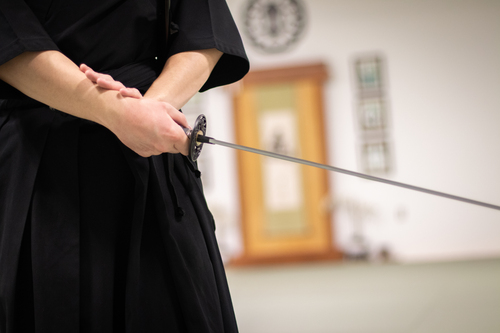
Iaido is the art of drawing the sword, striking, and re‑sheathing in a single, flowing motion. Rooted in the samurai tradition, Iaido emphasizes self‑discipline, awareness, and mental focus above all else. Rather than fighting an opponent, the practitioner’s challenge is internal: to perform each movement with precision and calm intent.
By contrast, Kendo — literally “the way of the sword” — evolved into a competitive sport where students face off wearing protective armor (bogu) and use bamboo swords (shinai). While Kendo carries deep philosophical elements of respect and self‑improvement, its expression is through direct combat, timing, and scoring.
Training Style and Environment
Iaido Ann Arbor classes often involve solo practice of pre‑arranged forms called kata. These sequences simulate combat scenarios but are performed alone, guided by breath control, posture, and attention to detail. Training is typically quiet, meditative, and introspective.
In contrast, Kendo classes are dynamic and social. Practitioners engage in paired drills, sparring matches, and tournaments. The energy in a dojo during Kendo practice is lively — filled with spirited shouts (kiai) and rapid footwork.
Gear and Movement
- Iaido uses a real or practice sword (iaito) focused on smooth, controlled movement.
- Kendo uses a shinai (bamboo sword) and requires protective armor including helmet (men), gloves (kote), torso protection (do), and waist guard (tare).
Movements in Iaido are deliberate and refined, each cut a moment to cultivate precision and calm. Kendo movements are explosive and competitive, designed to score points and react to an opponent in real time.
Goals and Benefits
Iaido builds mental clarity, posture, and deep focus. It is as much a path of self‑understanding as physical discipline.
Kendo, while also fostering discipline and respect, trains reflexes, competitive strategy, and physical endurance. Students often enjoy the camaraderie and challenge of testing themselves against others.
Which One Is Right for You?
If you’re intrigued by mindfulness, tradition, and internal mastery, Iaido Ann Arbor might be the perfect fit. If you’re energized by competition, teamwork, and active sparring, Kendo could be your calling.
Both arts offer rich traditions, personal growth, and unique ways to connect with Japanese martial heritage.
Finish Strong: Discover Your Path at JMAC | Iaido in Ann Arbor
Whether you’re drawn to the silent precision of Iaido or the vibrant combat of Kendo, there’s a place for you to grow at the Japanese Martial Arts Center.
Ready to take the next step?
Enroll in a class, schedule a trial, or learn more about our Iaido program today!